

By Damian Green, Chair, Social Care Foundation
Louise Casey’s first speech on social care since her Commission started was, as you might expect, bigger on history and analysis than solutions. I know that some in the sector were hoping for more, but I think we should welcome the intellectual rigour with which she is approaching the task.
In particular I would applaud the basic analysis that Beveridge missed a sixth “giant” to slay because in 1948 we simply didn’t have a mass population of elderly and frail or disabled people, so modern social care was not needed. Social care never had a “creation moment” like the NHS, so it has never had the political emotion behind it that an expensive commitment needs.
Also, in practical terms, it means that a fragmented system has developed. This means that responsibility is shared. In Whitehall this often means that it is evaded. On top of this, inside the Department of Health and Social Care, the NHS always has top priority. As Louise Casey says we have a National Hospitals Service, not a National Health Service.
But the divide between healthcare and social care is for most people an artificial one. The voice of social care in this muddled system is not heard loudly enough. She makes three suggestions, on dementia, safeguarding and MND, which she describes as “modest changes (which) point to bigger structural challenges”.
So it is necessary to keep arguing for those big structural changes and to campaign for them to be introduced as soon as possible. The Social Care Foundation report “Who Cares”, which is available in full elsewhere on this site, makes 35 recommendations covering the main areas where improvement is most urgent: funding, workforce, technology, integration with the NHS, commissioning and regulation, and reduction of need.
We recognise that some of these ideas will cost public money and therefore may take longer. But some could and should be introduced immediately. We could introduce a national assessment system with a standardised grading of entitlement to care. We could have a professional registration scheme for care workers. Why not have better integration with the NHS by establishing joint budgeting, commissioning and service design?
There are many more good ideas around and I know that groups have been assiduous in presenting them to the Casey Commission. We all need to keep the drumbeat of debate going in the coming months and years to ensure that this chance to put social care on a sound and sustainable footing is not missed.
Read more on the Casey Commission website: Baroness Casey calls for a moment of reckoning on adult social care
Read the “Who Cares” reportOther news

SCF Report - WHO CARES? Solutions for the Social Care Review
10 September 2025
UK think-tank calls for “radical and urgent reform” of Britain’s “broken” social care system. The Social Care Foundation (SCF), a UK-wide think tank, today publishes a wide-ranging report on the state and future of social care in Britain.
Read report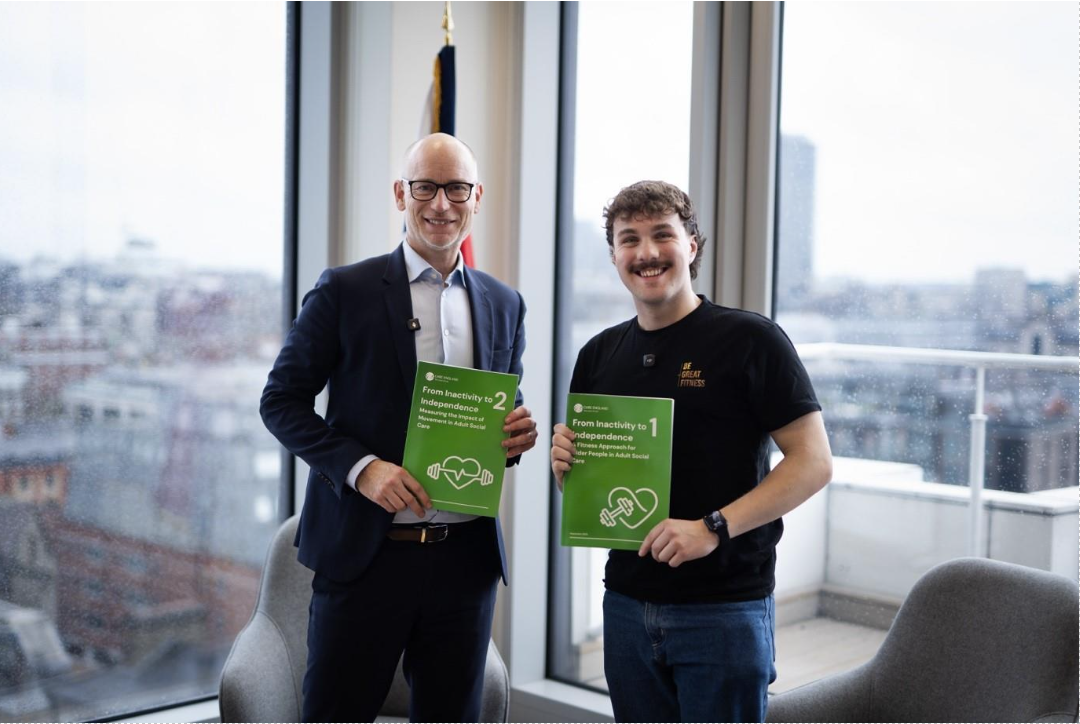
From Inactivity to Independence
09 February 2026
Care England and Be Great Fitness launch second white paper challenging “inevitable decline” in care homes, with Minister for Care Stephen Kinnock backing movement-led reform
Read more